Exploring the World of Gatekeepers, Sales, and Business Development with Kevin Downey
Subscribe at any of the services listed above. 👌
And if you like what you hear, please consider leaving us a 5 star review!
Kevin Downey

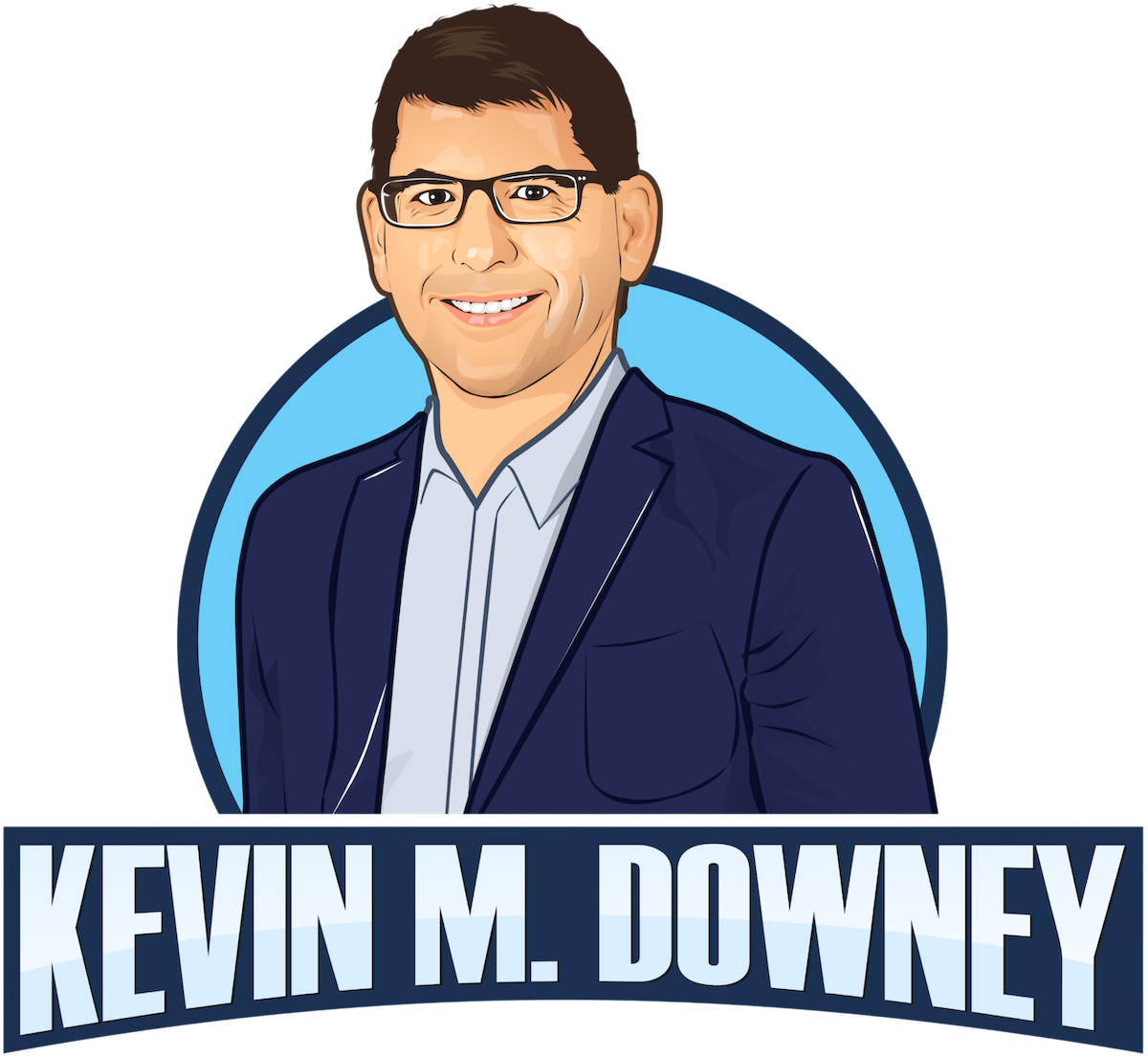
About Kevin Downey
Kevin Downey is a Kansas City-based recruitment leader and entrepreneur with a proven track record in business development, sales team building, and B2B email marketing. Born in Orland Park, IL, Kevin was raised in a family of enterprising immigrants who built one of the largest European tile import businesses in the U.S., instilling in him a relentless drive and entrepreneurial mindset.
After earning degrees from the University of Iowa and Lewis University, Kevin launched his career in the golf industry, quickly becoming the youngest sales rep at Slazenger Golf and later thriving at Callaway Golf Company. In 2003, he led the development of the Leawood Office Business Center, a multi-million dollar executive suite project.
In 2014, Kevin founded his recruitment agency on a simple principle: outwork and outperform every vendor in the industry. His firm specializes in scalable, repeatable hiring systems powered by data-driven sales and marketing strategies, including high-converting B2B email campaigns that consistently generate inbound leads. Kevin’s ability to blend strategic insight with executional excellence has helped clients build elite teams and grow faster.
Topics discussed in this episode with time stamps
00:00 – 00:17 “Companies will say that our industry is unique. We’re relationship-based, so we can’t cold-call, or we can’t use email to do a cold call. That’s complete nonsense. That’s BS. I don’t care what business you’re in. You have to introduce yourself to new people at some point. The only way you’re going to do it is either go meet them or pick up the phone.” — Kevin Downey
00:18 – 00:36 Welcome to Peppershock Media’s Marketing Expedition Podcast
00:37 – 02:38 About Kevin
02:28 – 07:53 Marketing Essentials Moment: AI and Brand Visibility
07:54 – 09:15 Kevin, welcome to the show!
09:16 – 12:23 Dividing Sales and Business Development Roles
12:24 – 17:23 Metrics and Tools for Tracking Sales
17:24 – 22:07 Getting Past Gatekeepers
22:08 – 26:05 Different Salesperson Profiles
26:06 – 29:45 Networking and Relationship Building
29:46 – 31:45 Sales Process and Lead Qualification
32:23 – 35:08 Negotiation Tactics in Sales
35:09 – 39:18 Prequalification and Online Lead Forms
39:19 – 41:47 Interview Questions for Sales Candidates
41:48 – 43:21 Compensation Models for Sales Reps
43:22 – 47:57 Advice on Sales Hiring
47:58 – 50:00 Training and Onboarding Salespeople
50:01 – 50:24 Reach out to Kevin
50:25 – 50:47 Thank you so much, Kevin! Share this podcast, give us a review, and enjoy your marketing journey!
50:48 – 51:34 Join the Marketing Expedition Community today!
Like what you hear, but need more information?
Read the full transcript:
Kevin Downey:
“Companies will say that we are, our industry is unique. We’re relationship based, so we can’t cold caller, we can’t use email to do cold. That’s complete nonsense. That’s BS. I don’t care what business you’re in. You have to introduce yourself to new people at some point. The only way you’re going to do it is either go meet them or pick up the phone.”
Welcome to the Marketing Expedition podcast, an auditory journey through the latest in marketing, branding, and advertising. Now, here’s your Marketing Expedition guide, Rhea Allen.
Rhea Allen: On this episode of the Marketing Expedition podcast, I get to speak with Kevin Downey. And he is a Kansas City-based recruitment leader and entrepreneur with a proven track record in business development, sales team building, and B2B email marketing. Born in Oakland Park, Illinois, Kevin was raised in a family of enterprising immigrants who built one of the largest European tile import businesses in the US, instilling in him a relentless drive and entrepreneurial mindset. After earning degrees from the University of Iowa and Lewis University, Kevin launched his career in the golf industry, quickly becoming the youngest sales rep at Slinger Golf and later thriving at Callaway Golf Company. In 2003, he led the development of Leawood Office Business Center, a multi-million dollar executive suite project. And in 2014, Kevin founded his recruitment agency on a simple principle. outwork and outperform every vendor in the industry. His firm specializes in scalable, repeatable hiring systems powered by data-driven sales and marketing strategies, including high-converting B2B email campaigns that consistently generate inbound leads. Kevin’s ability to blend strategic insight and executional excellence has helped clients build elite teams and grow faster. And you’re in for a treat. He drops all kinds of good nuggets about salespeople and business development people and the differences and hiring them and what kind of compensation and motivation and all the things that we need as business owners and entrepreneurs and marketers to help us in this process. Sales is a part of marketing and so you will get to learn all about the things that we’re doing and I think we’re going to have him come back and talk more about B2B email marketing because we really didn’t even get into that topic. We talked all about the roles and all of the recruitment processes and questions and things that we can cover when we are thinking about hiring salespeople and business development people. So stay tuned for that. But right now, it is time for your marketing essentials moment, the basics that you need to help you continue to build your brand and your bottom line. Today’s topic, I wanted to cover how we can make sure that our brands are showing up in AI summaries, in chat GPT answers or Google AI overviews or perplexity or any of those different AI powered tools that people ask questions, long form questions and queries of. We want our brand to be the answer, right? And so thinking about nailing down your entity signals so that AI knows who you are. AI systems try to resolve who a brand is before they repeat it. So using a consistent brand name, tagline, category, and short description wherever the site or socials or in directories, and putting a clear about block on our websites, and have frequently asked questions, right? So that you can have the questions with the answers on your website. Who do you serve? What do you do? Where you operate? Proof of your performance and your differentiators, right? We want to keep everything consistent. Your NAP, your name, address, and phone number need to be consistent across all listings, especially if you are a local business. We want to have quotable content blocks. AI loves clean, extractable answers. AI’s summaries will pull that content and if it looks to be like it’s safely lifted, then those FAQ sections or things on your service pages or home pages or a podcast page, we want to write in a tight Q&A format, 40 to 80 word answers, add definition paragraphs like You know, what is AI powered optimization or generative engine optimization? That’s going to put we’re going to put that on our frequently asked questions so that pepper shock shows up, right? Pepper shock can help you with this, right? We want those answers. We want to be in those answers. You can do comparison tables. You can do DIY versus, you know, you’re done for you done with you. You can do video ads as CTV and do brand strategy versus campaign execution types of things. Like, what can we do to continuously get our information out there? And by the way, the subtitles and the subtitle text, AI can read that. And so those are all helpful things in video to continuously be come and being a top authority in those consistent results that we want to do. So think about the different ways that you can have some supporting articles, some interlinks, some backlinks, some pillar pages, maybe three to five different pillars of what you offer, and update and refresh those cornerstone pages on a regular basis. AI tends to reward maintained sources. Get cited by other trusted sources, right? AI trusts third-party validation. So mentions matter a lot. Those Google reviews, those recommendations, the ratings, the rankings, All of those things matter being on Reddit and subreddit. It will pull information from that in Wikipedia, all of those places that are trusted third party validators that can help you with those signals. Publish case studies and pitch them to local regional business publications or news outlets. If you’re getting quoted on the news, that’s helpful. partnerships with your chambers, your universities, go speak at an event, go be a thought leader in your industry, get quotes, get quoted, right? And go help out nonprofits. Again, get quoted. That way, those are the answers that will come up in the AI readable material. And think about your structure and your schema on your website. Use proper headings. H1, H2, H3 tags be very descriptive. But think about the descriptions that you’re using, right? What kinds of things would people be searching for or asking of their devices vocally? Think about the organization of your local business. Think of the person that can be the face, right? Like for us, I’m all over the place. So think about that, the service page, the FAQ page, the podcast series, you know, those things with subtitles and transcriptions are very, very helpful. And then ensure that each service page that you have has a dedicated page with a clear scope, outcomes, and some case studies, some wins, some things that it can pull information from. in the moment and you will always be in there if you optimize for the generative engine results that you want to be in those AI summaries. So think about those different types of things and types of questions that people might ask of your business that you can answer and turn those into clippable, quotable moments that can then be pulled and lifted and then served up in the AI results, right? Think about those things. And again, think about your reputation and the reviews, especially for local visibility. The Google business profile is very active. Make sure that you’re updating your Google business profile. You can post to it just like you do with social media. And then think about all of the ways that you can incorporate information onto all of the different platforms, directories, different places that people will get information and AI will generate information for you, about you, all of those types of things. Okay, with that, let’s get into our interview. Welcome to the Marketing Expedition podcast. I’m your host, Rae Allen. I’m the president and CEO of Pepper Shock Media and the founder of the Marketing Expedition community. And today’s guest, we have Kevin Downey with us. Kevin, welcome to the show.
Kevin Downey: Thanks for having me. Appreciate it.
Rhea Allen: Excellent. So I would like to know a little more about you. I know we all have your bio and all that, but just share a little bit more. You’re in Kansas City. Tell us a little more about how you got to where you are now.
Kevin Downey: Yeah, I mean, short version is I grew up in an entrepreneurial family in Chicago, retail and distribution businesses, and ended up really not getting educated, maybe in the right things, went to graduate school, and ultimately started PhD work, quit school, and I ended up in the golf business, ironically enough. Made my way through a couple of jobs and then got recruited by Callaway and TaylorMade at the same time. Came to Callaway Golf for Kansas City, for Kansas and Missouri and, you know, was there for three years and then just decided I need to go do my own thing. So I ended up an entrepreneur and got into real estate and then ultimately my agency.
Rhea Allen: Awesome. Well, I love to golf, so there’s something to talk about there for sure. So let’s talk and dig in a little bit about what you do now. And we’re talking recruiting and sales teams and what to look for. Share with us maybe some golden nuggets of wisdom that our audience can glean from you in terms of when it comes to hiring the right person.
Kevin Downey: Yeah. So there’s two big things that I see companies need help with. On the B2B side, business development in particular, and lead generation, which we can talk about that maybe second, and email, because that’s a big, big expertise of mine, did that for eight years for clients. But I would say on the sales recruiting side, which is a big part of what we do as a company for clients is, looking at sales team structure, especially in B2B and identifying whether or not first you need a salesperson or do you really just need business development people at first in a company, especially small business? Because we are seeing sales companies reducing the number of salespeople, especially in B2B and increasing the number of business development reps or sales development reps that are dedicated to lead generation and appointment setting for those salespeople, right? And I think for a couple of reasons. I would say one, salespeople have gotten really, really expensive in the United States and they don’t really want to prospect because it’s gotten so difficult for them. And it’s also very, very expensive to have them do that for a long period of time. Right. So seeing a lot more reps being fed leads in appointments so that they’re always dealing with prospects or appointments. Again, hot prospects, right?
Rhea Allen: Right. So they’re not really cross-contaminating between spending all of their time, spinning their wheels, trying to get the leads, but then also doing the sales. So dividing those roles up and then having leads to even hand over to the salespeople, right?
Kevin Downey: Right, we just, we have to get ROI out of our sales team. Companies are very frustrated with salespeople, again, especially in B2B hunter sales type roles, which is different than farmers, but they’re really frustrated with those hunter sales roles, which is what a lot of smaller B2B companies are trying to do and look for. They hire and they get these great resumes and all the experience and industry experience, deal with it with agencies, right, all the time. Marketing and advertising agencies. And they hire these reps who have all of these glorious resumes and all this experience, but they never dial the phone, right? They got a pass when COVID happened. Oh, we can only use LinkedIn or we can only do email because, you know, we can’t get a hold of anyone or we can’t go see them in person and all that stuff. But that time is gone. And we can’t waste resources like that kind of salary on somebody who’s going to just do manual email and LinkedIn, like it just doesn’t work. You can automate those things anyway. So we have to keep them busy with leads and appointments so that we’re getting everything out of them we can and get ROI out of those salespeople as fast as we can.
Rhea Allen: Do you think that a lot of companies try to kind of have people do both of those roles simultaneously, and maybe that is one thing that is sort of a demise of the salesperson versus the business development person? I mean, just separating the roles seems to me like it’s a no-brainer, but I often see people trying to have that person be the one and only and it just doesn’t seem to work, right?
Kevin Downey: It doesn’t work, especially now. Again, I think it’s changed over time, right? So we had a harder time getting all the prospects decades ago, it was getting harder, right? As we had a little bit of remote work, companies are fragmented all over the place. People could work more, you know, from home a little bit. So we started to see that obviously, maybe 20 years ago, right? So we’re seeing that increase in that challenge of prospecting and getting ahold of people. You know, because again, before that time, a sales rep, especially a farmer sales rep could go out and make 20-25 calls. And they could talk to a decision maker half of the time or more. Right, so they were in sales mode a lot more often. But now we’re dealing with research and repetition of things that sales reps are built for, and they’re too expensive to sit there and have them do. So if it’s a farmer sales role, where they’re going to manage the customer in the long run, and there’s cross selling and upselling and all that stuff, then I’m okay with them doing their own prospecting so long as they’re really held accountable for it. Because there’s a light at the end of the tunnel, if that makes sense. But in a Hunter sales model, where we’re rep is getting paper, if you will, and then they have very limited to no relationship with the customer in the long run, maybe an annual renewal, but that’s it. I don’t want those reps doing anything as far as prospecting goes anymore. They’re too expensive. They don’t want to do it. They’re not built for it. I want dedicated business development reps and email to drive them leads and appointments so that they are dealing with prospects all day long.
Rhea Allen: What do you think some of the metrics that are useful, like if we were to put up a scoreboard for a salesperson and or also a business development person, what are some things to track that make sense that are easy to track but yet useful to those who are working with either the sales or BD person?
Kevin Downey: Sure. I mean, on the business development side, it’s pretty easy. Like I’ve always said, activity breeds business, right? If you make the calls, and you’re trained properly, they’re always going to have success, right, to some degree. I think number of calls, make sure there’s activity, number of actual conversations with a decision maker per day. And then, and we’re always measuring, you want to measure that to an extent. And then you know, how many leads and appointments they generate. But if they get conversations with decision makers, and they’re trained properly, and they have a process, they will get the results that you’re looking for. Right? In terms of salespeople, if they’re, you know, if they’re doing their own prospecting, then we look at those same things in the early stages, right? But if they’re not responsible for their own prospecting, then obviously, it’s like, how many calls are they doing sales calls that are actually sales calls per day? And what is their conversion rate on those things?
Rhea Allen: Do you have tools that you recommend they use to help track this? I mean, is it tick marks on a whiteboard? Is there AI tools that you’re seeing now that people are using?
Kevin Downey: That’s a good question. I, you know, I haven’t come across a lot. We, we still do a lot of old school. So I train reps to track because I want them to get in the habit of tracking on their own tick marks on a piece of paper through the day, and then reporting at the end of the day, whether it’s Google sheets or smart table or, or air table or smart sheet, or in the CRM, if it has it, I don’t really care as long as we’re tracking those numbers on a day to day basis.
Rhea Allen: Right, right. Because sometimes it can be hard to do.
Kevin Downey: Probably more advanced, right? Because you asked that question. I think the sales calls is more advanced, because those are already set up in a calendar on something in the CRM or whatever we’re using. So I think you can track more there. Right? Or automated.
Rhea Allen: Mm hmm. Yeah, it’s easy to look at the calendar versus how many times they picked up the phone and dialed.
Kevin Downey: Yeah, just, I mean, you can look at the phone log, you can look at the length of conversations, you can run reports from the phone systems on average conversation. But on the BD side, I don’t worry about that as much as I just look at total number of conversations per day with decision makers. And if that’s low, then I’m looking at two things. Are they not making enough dials? That’s one thing to look at, obviously. And then secondarily, why are they not getting ahold of people if they’re making enough dials? So is it a targeting problem? Do we, are we too spread out in terms of titles we’re going after? You know, are we, are we missing the mark there?
Rhea Allen: or are they able to get through the gatekeepers and develop a quick rapport with them to help them along their journey to get to the right person? That’s always like the bridge to cross getting past the gatekeeper, right?
Kevin Downey: And when we train that, so I train that with reps in it and we don’t have to worry about building rapport, but that’s a good point. Like that can be, but we train them in a way that they just go right through them.
Rhea Allen: Okay, well, without giving away the farm, what would you recommend if somebody was trying to, you know, come across, they’re trying to get to the right person, but they run into a gatekeeper? What do you typically say to your people that need to learn how to get past that person?
Kevin Downey: So it’s the same strategy. Overall, it’s the same philosophy with gatekeepers that we have with subject lines in email that we also have with voicemail, leaving voicemail. So it’s all the same philosophy. And it is, When we’re going through gatekeepers, you have a name, you ask for the person by name, as if you know them, as if you are actually an employee in that company, but didn’t know that person, let’s say, but you were part of the company. That’s how you have to act and the way you have to sound when you ask for them. So if I’m asking for John Smith, Betty answers the phone, Betty, hey, it’s Kevin Downey, is John Smith there, please? That’s it, I mean, and if she asked Kevin, what’s it regarding? I’ve got, you know, I’ve got something, I emailed him, I need to follow up with him on the phone. I mean, we’re doing everything we can to just get to him.
Rhea Allen: That’s it. Right.
Kevin Downey: Simple with no deep explanation.
Rhea Allen: Simple, but maybe highly effective when it works.
Kevin Downey: It’s just like subject lines and emails, voicemails, same thing. We do not pitch on subject lines. We do not pitch in voicemail, right? We, we formulate everything to not pitch.
Rhea Allen: Yeah, you’re just trying to get them to call you back.
Kevin Downey: Call back or open the email, reply to the email, whatever it is.
Rhea Allen: So what do you think is a realistic timeframe for when a company hires a new salesperson? Do they get them trained up? you know, what is the first 30 days, 60 days, 90 days, like what do you think the expectation is when they actually start to produce results? I mean, obviously it depends on the industry and what it is. I mean, on average, and you know, I’m not gonna hold you to it, but what do you think, what’s a realistic expectation for sales?
Kevin Downey: Well, I think we define results, but, I mean, for business development, it should be immediate. Like there, it shouldn’t take any longer than a week for a rep to ramp up to the point where they’re fairly effective in two to three weeks to be a month to be at end game, like to where they’re fully good to go. Like they should have the process down, you know, never reading scripts. They know what they’re going to say. They know how they’re going to respond to certain things quickly, but they’ve got their process down and it’s, it’s cool. It’s gold, right? It should, that should never take longer than a month. outside of the prospecting side, salespeople, I mean, if they have leads, or appointments, they need to be gauged pretty quick, right? Like, once you’ve got them coached up on products and services, then they should be able to present whatever you have without too much difficulty, right? So I think the same, I think getting their feet wet for a few weeks, but you know, a salesperson and what they’re doing day to day, 30 to 90 days to really get to the point where they’re solid. I think it depends on what they’re selling and how, what’s the medium.
Rhea Allen: right yeah yeah yeah i know i’ve once you know hired a quote-unquote salesperson and they really just didn’t produce the results and it just it was miserable and i’ve i’ve done like outsource sales for our agency we’ve done you know Contract sales, I mean, it’s like trying to find a needle in a haystack and that haystack keeps moving and trying to find the golden, you know, the right person that can do sales. It’s like, I’ve always often thought, well, the only person that can really sell the company is the owner or the founder or the, you know, and they’re not really selling, they’re just sharing what they’re experts at or what they’re passionate about.
Kevin Downey: But there you’re talking about sales, right? So we have to define the difference between sales and you’re referring to B2B. When you hire a salesperson, are you insinuating or inferring about them doing business development? That’s not sales. Business development is a marketing function done by salespeople. You’re not selling until you’re talking to a decision maker with a pain point. Then you are in sales mode. But until you get to that point, that’s not sales, that’s marketing.
Rhea Allen: Right. Yeah. It’s, it’s a, it’s a fine line to walk to get to that point.
Kevin Downey: We hire people to do the job and we have to, you know, and again, when we’re recruiting the United States reps, we’re putting them through active index to define what type of sales they’re built for, if they’re built for sales and what type. So if I’m looking for hardcore lead generation, I want a BDR SDR profile. That is vastly different than a hunter sales rep, which is also different from a farmer sales rep. They’re different things.
Rhea Allen: Well, the last thing you want to do is have your reputation damaged because they’re hardcore and pushy and kind of that ick sales mentality that you get when going to an old used car sales versus somebody who’s consultative and listens and understands.
Kevin Downey: For the most part, true sales is always that, it’s always consultative. Whether we’re talking a one call close in B2C with selling windows, or we’re talking B2B sales, it’s all consultative. I mean, that’s what true sales is. The tricky part on the front end is identifying decision maker and then pain point, right? And that’s not necessarily what I want the salesperson to be doing. I want somebody else maybe doing that or some other methodology to do that. Because again, Hunter sales reps in particular are not built for cold outreach on a day-to-day basis. They’re completely wired the opposite. Right. But hardcore BDR and B2B with lead generation, that’s that’s a high C profile and inactive index. It’s high consistency. It’s repetition of 50 to 100 times a day doing the same thing over and over and over again. That is the exact opposite of what a Hunter sales rep is built for. Hunter sales rep is high influence, high intensity. They’re built to sell. They’re built to consult. They’re built to be an authoritative figure, to educate, to lead, because they have a very similar profile to a CEO in a lot of cases, right? High level leaders. That’s not a BDR. That’s completely the opposite. So hiring a Hunter sales rep to go out and do business development to then also sell is why so many companies waste so much money on salespeople. It doesn’t make any sense.
Rhea Allen: Yeah, I’ve been there and done that.
Kevin Downey: It’s the epidemic in in sales recruiting, or in sales and B2B. It’s the epidemic problem in the United States right now with first world countries across the board, but the United States for sure. Farmer sales reps not as bad, because they have a again, they have a light at the end of the tunnel for business development, like they let’s say they can build up to 50 customers or 100 or whatever the number is. If they have to do their own business development, they may not be built for it, but you can force feed that through and get them to grind through it because there’s light at the end of the tunnel. You could have BDRs do lead generation for them in appointment setting, but they can be expected to do their own because there’s an end game there. Whether it’s six months or 12 months, they’re going to be done with it at some point. right, more or less, they’ll get referrals and network and all that stuff. But the hardcore day to day biz dev ends for them. But a hunter sales model, that is not the case. Because they get paper and they’re done with the customer. They’re always selling. Right? That that person is not built for, you know, doing their own business development. We’ve seen it over and over again. They’re not even close. So right.
Rhea Allen: Let them stay in the lane that they’re good at and get out of the way when somebody needs to take over from there.
Kevin Downey: But I’ll just end with that. The thought is that companies think Hunter and they think go find the leads and then also sell. But that’s not what we want. We want them to sell. That’s what they’re built for. Present, follow up with leads, be aggressive to a degree. present consultative sales and close, get paper, get the customer. But the business development, the research, the repetition of identifying pain point and decision maker, that’s off the table for what they’re built for. And it doesn’t make sense financially anymore.
Rhea Allen: Right. So how does networking play into I mean, that’s more of the business development role. But let’s talk about networking a little bit or relationship building or whatever, you know, everybody has a different term for it. But going to being around people like let’s let’s dig into that a little bit. What’s your philosophy? for a salesperson doing networking versus a business development person doing networking, like the traditional sense where you go to an event, you shake hands, you pass business cards, you have some conversation. Tell me a little bit more about what you think
Kevin Downey: Because it’s always good. I mean, I think it’s always good on both ends. If they can either one can get in front of prospects, you can meet them face to face and you can shake hands and all that stuff. And in the modern sense, I guess, I think it’s all good. I just caution companies to the thing that I’ve heard for years, right? We’ve been in business for a decade, is that companies will say, and I want to make sure you’re asking the question, you know, where I’m answering the right question, right? Companies will say that we are, our industry is unique. We’re relationship based. So we can’t cold caller, we can’t use email to do cold outreach. That’s complete nonsense. That’s BS. I don’t care what business you’re in. You have to introduce yourself to new people at some point. The only way you’re going to do it is either go meet them or pick up the phone. So is that networking or is networking you’re only dealing with people that you’re introduced to by somebody you already know?
Rhea Allen: Yeah, I agree. I think that The idea of meeting new people and being around in the right place at the right time, all of those things, but putting yourself there in the right place at the right time in front of the people that you want to be in front of is really valuable if people can processize it and use it to their advantage and follow up. I think that’s the main thing that I see that people don’t ever do. If I’m at an event and I run a company, so I have the title CEO, so people want to talk to me. And I might be truly interested in what they have to sell to me, but if they don’t follow up, the next day I’ve slept, I forgot about it, and moving on, right?
Kevin Downey: I mean, networking, so just defining the difference between networking, which I agree with 100% of everything you say, versus the companies that tell me that they’re looking for sales reps with a network or a network of business or a book of business because they don’t know how to go out and find new customers, meaning the company, and then they’ve hired reps who have failed to do that because they didn’t know how to teach the rep anything and they didn’t build a process. And so they believe that the only way to sell is via relationship through your network. That that’s actually kind of a common logic right now that we see. And it’s completely wrong. Like you have to go out and meet people that you don’t know.
Rhea Allen: You have to build your network continuously, because people move on, they move to different, you know, companies or whatever the case might be. Yeah, for sure.
Kevin Downey: I’m not going to ask you to introduce me to your clients to find clients. I know you have to build a system to go out and meet people yourself. You have to build a system for prospecting, finding decision makers and pain points and introducing your products or services to them. It’s that simple. Does it help when you know people? And again, networking and all that stuff is part of it, but you have a network and you have contacts that then refer you, that’s great. I love it. But you can’t build a business around that concept. At least not a scalable one. You can’t scale that.
Rhea Allen: Let’s talk about the process a little bit. So I know some people kind of, you know, okay, there’s a suspect, there’s a lead, there’s, you know, a qualified opportunity, there’s, you know, all the different stages that we go through in the sales process. Tell me a little bit more about what your thoughts are on tracking all of that and what stages constitute each level of when it’s time for a business development person to hand it off to the salesperson. Tell me about the stages that you run through with your clients.
Kevin Downey: Sure. I don’t think it’s all that difficult, but maybe I oversimplify it in a way. I mean, we build a targeted prospect list. So let’s say Apollo, right? We’ve got the right companies, the right size, geography, titles of the people we want to get to. And then we have to find the decision maker or a decision maker. And a decision maker is someone who can either write a check or authorize the writing of a check. If they can’t do those things, they are not a decision maker. And now it’s a waste of time. So find somebody who can write a check or authorize a check, right? Like in a bigger company, of course, you identify decision maker, do they have enough pain point, in some way, shape or form, however, we want to define that to look at your stuff, look at your catalog, your, your deck, your price list, whatever it is. If so, you have now found a lead. That is a qualified lead. Until that point, they’re a prospect or piece of data for all I care, right? They’re a potential prospect is what we call them. They’re a lead once you’ve got a decision maker with a pain point. Once they are then a qualified lead, now we’re in sales mode. Next step is they say no, or they say yes. That’s it. Like you can have them in process of sales and follow up. But at the end of the day, there’s still a qualified lead at that point. So there’s not really a lot to it from my point of view.
Want to start a podcast but don’t know where to begin? At Poderific, we don’t just produce podcasts. We help you create auditory experiences that will captivate your audience. Our state-of-the-art podcast recording studio, powered by Peppershock Media, is designed for creators like you. Record with high-quality equipment supported by our expert team and distribute your podcast across major platforms like Apple and Spotify. Whether you’re launching your first episode or you’re a seasoned podcaster, we got you covered. Visit Poderific.com today to learn how we can help you produce, record, and share your story with the world. Your podcast deserves to be Poderific!
Rhea Allen: Let’s talk about some negotiation tactics as far as the salespeople when they’re ready to get, they got to the point, they’ve got the lead, they’ve got the decision maker there. I mean, it can be simple as yes or no, but what are some maybe some negotiation tips or tactics that you’ve seen that have been highly effective?
Kevin Downey: That’s a tough question. I don’t deal in negotiation a lot because they deal in flat rate and you either have the money or you don’t. When you say negotiation, I’m assuming you mean to price to a certain extent.
Rhea Allen: or just when they’re maybe leading up to the negotiation, even like, or leading up to yeah, price point. But when maybe I just envision, you know, in the room with the decision maker, they’re trying to make a decision. And, you know, giving them answers to their pain points, right? Yeah, solutions that they need. Yeah. I don’t know. It’s like sometimes you try to get the decision maker to like answer his own question and sell himself in a way. I don’t know.
Kevin Downey: It’s exactly what you want. You want them to buy. So do what, does your products and services solve the problem that they have, whether it’s, whether you’re a replacement for something or an add on for them to make the leap to say, yes, we want that. Now, if you’re saying in that part before you get to a yes, you just have to set the table that you have done enough digging to find out what their real pain points are, and that your products or services solve those pain points. You do that, then you’re going to get a yes. Now, if you’re talking about they want it, but they don’t have the budget, That that’s if you’re talking about negotiating there, that’s a little bit outside of my wheelhouse, to be honest, because from my point of view, your services or products cost what they cost. If you want to discount them in order to get client and cash flow. Feel free to me. It’s not something I ever really entertained. You either can as a company, a buyer, you can afford it or you can’t. I mean, are they really going to say yes because you drop the price? Maybe sometimes a little bit. Maybe throw them a bone, 5%, 10%, 20% off or whatever, I guess.
Rhea Allen: If they pay up front.
SPEAKER_02: If they say, we really want this, but we can only give you 40% of your asking price. Well, no.
Rhea Allen: No.
Kevin Downey: And you can’t afford it.
Rhea Allen: I know I’ve had that before where like, well, I just don’t know what my, I don’t know what it’s going to cost, blah, blah, blah. They, you know, they go through this whole, I don’t know, you tell me how much it’s going to cost. And then you tell them what the price, the value that you present to them. And they’re like, well, that’s not my budget. I’m like, oh my gosh.
Kevin Downey: Well, we want to qualify that in the business development process. When we’re in business development mode and the entry to sales mode, pricing from my point of view and the way I train needs to be established. Budget needs to be established in the early stages of that process. I never want that to be a final thing. Never.
Rhea Allen: Yeah, I agree. And that helps with prequalification and all those types of things. Yeah, I agree. What is your feeling about when you do online lead garnering and having a form fill for people to fill out and give you? as much information up front versus, oh, we just want to get the name so that we can follow up with them. There’s like two schools of thought there. What’s, what’s kind of your, you know, I mean, I just want somebody to call.
Kevin Downey: Right. So when we’re doing email, cause we don’t, We don’t worry about driving to our website because we do everything with email, right? So we’re trying to generate a reply. So I’m asking them that they have this pain point. Hey, I can solve it for you this way. This is what I want you to do next. I want you to reply and I’ll send you a PDF, give you some information on our programs, our offerings, our pricing. And all I want is them to say, yes, send the PDF. Great. We send it. My SDR gets that information, puts them in the CRM and calls them right away. So we give them a reply with a call to action, obviously to go to a sales call. But my rep is then also calling them at the same time to get them to move the needle, as we call it.
Rhea Allen: Right.
Kevin Downey: If you’re referring to more like B2C or B2B websites that are gathering lead information through an intake form, I mean, I’m all about generating more leads and having more people for my reps to call. And if some just aren’t qualified, then so be it. But there are some circumstances where I would go the other way. I would pre-qualify them a ton in a form. It depends on resources and how… how much you need to pre-qualify them. I think that applies in certain businesses just a lot more than others.
Rhea Allen: Yeah. So if somebody is listening to this and they are about to hire either position for the first time, What’s the process? What do they need to consider? What do they need to, and I’m sure hire you to help, but what kind of things could you kind of walk us through? Very first time they’re ready to, you know, they want to grow their business. They want, they know that they need sales. They know they need business development. What would you say is like the path that they need to go on?
Kevin Downey: Yeah, I mean, the starting point is, what does prospect size look like, in terms of total number of contacts you can reach out to? Like, if we’re talking about B2B is what I’m assuming you’re? Yeah, sure. Right. So what does that contact list look like? That then formulates whether or not email high powered email is an important part of my infrastructure to drive leads. So I’ll take that, those things, right? We’re still gonna have a BDR, SDR in all likelihood anyway. So now the question is, do you really need a sales rep or can you, Mr. Owner, Ms. Owner, can you sell if you’re driven scheduled appointments? Let’s say one a day. Okay, if that is the case, I’m gonna just drive you leads. If you say, you know what, I have absolutely no time on my schedule, I truly need a sales representative, but I also need business development. Depending on the sales model, if it’s farmer, then I wanna go hire a sales rep, have them do their own prospecting. If it’s gonna be a hunter sales model, then I still prefer a BDR in the play to do the cold outreach and reply to email leads, but to then drive scheduled calls to a sales rep that you hire. And I would try to get the sales rep depending on budget on like a commission basis, because you’re driving them nothing but appointments and leads. So that’s really fair. Right? It wouldn’t be fair if you’re asking them to prospect that makes no sense. We get that request all the time. That’s a waste of time.
Rhea Allen: What are your favorite recruitment tools now? I mean, there’s so many out there. I’m just curious what you’ve been using lately that has been working for you.
Kevin Downey: Yeah, we’ve used the same stuff for about 10 years. I mean, Aptive Index being the lone add-on, the exception. So what we do is we do marketing. So you’ve got your tools and your funnels for marketing for candidates. We bring the candidates in through an intake form for each job. They fill out that form. We use JotForm, right? And JotForm tables. All the candidates end up on JotForm tables for a job, for a client. The recruiter has their resume, and then we gather either video introduction or we have them take active index. I’m partial to the latter, much more so than the former for U.S. recruiting. When we’re recruiting remote reps in Latin America as a sidebar, we have to get video because we need to gauge English speaking skills. So that’s different. We don’t use assessment with them. But for U.S. reps, I want assessment. I want, I get resume, get assessment, and we have them fill out an intake form where we’re getting a lot of information from the candidate, so that lessens the amount of time we spend doing pre-screen interviews with people, because we want to get as much intel as we can on the front end, and assessment. Those are the tools we use for the most part. I mean, the marketing funnels can be LinkedIn, they can be Indeed, there’s a whole bunch of things outside of those we use, but depends on the job and the client. Yeah.
Rhea Allen: What are some of your favorite interview questions?
Kevin Downey: I am really different. You’re asking me? I’m really different than what companies do internally. So I am completely different. Like I think most of what they ask is trite questions that are a waste of time. I, what I want to know in sales or biz dev candidates is I want to know a little bit about background. Why are they interested in looking at this job? I want to ask, I’m going to find out if they’ve done homework on the company or the job, right? Whether they were asked or not. And, um, I want to get some backstory and history on where, where they’ve been, where they’re trying to go. And does the comp fit their needs right now? Because that’s a big deal to me. Because if comp doesn’t fit, they can take the job for the salary, but then they’re going to go look for another higher salary immediately, which means they have no longevity.
Rhea Allen: Yeah.
Kevin Downey: Let’s talk about- Even if active index fits, even if they show that they fit on active.
Rhea Allen: Yeah. Yeah. Let’s talk about compensation models because everyone has so many different ways of doing it. I’m curious to learn what you think is a good, solid compensation model.
Kevin Downey: U.S. reps or Latin America?
Rhea Allen: Probably U.S. Let’s go U.S. based.
SPEAKER_02: Sure. I mean, average is 50% base, 50% bonus commission. I hit an OTE roughly as an average. I mean, some are higher base than that depending on the industry and some are lower, but It depends on if it’s a hunter or a farmer and industry and margins for the company and all kinds of things, but. Sure. Fuzzy math, 50, about 50% should be base. I mean, you can do commission only if you are driving the reps leads and appointments for hunter sales or even for farmer sales. And they’re building their book of business. You can ask them to be commissioned only. But it’s dangerous because you just you risk losing the rep too quickly. Right. You cannot do commission only and ask a rep to be a Hunter sales rep and prospect. We get that question all the time from companies and that’s a waste of time.
Rhea Allen: Right, yeah, because then they’re not focused on the one thing that can lead to the sales.
Kevin Downey: They’re just not going to make the calls. I mean, the reality is they look at the light at the end of the tunnel and how long it’s going to take to get where they’re going with how hard business development is now, and they ghost the job. You can recruit 100 of them on commission only, and you would be lucky if one sticks a year. Lucky if you got one to stick a year.
Rhea Allen: Yeah, the turnover would be incredible. Yeah, it’s a waste of time. Yep, exactly.
Kevin Downey: If a company needs to do commission only because they don’t have any money, like just being blunt, then you go to Latin America and or you learn how to do email yourself, drive yourself leads. You don’t need to hire a sales rep for that.
Rhea Allen: Right, right. Well, Kevin, this has been very enlightening. And even, you know, I always learn stuff from my podcast guests, just as much as I hope my audience has too. But to wrap up, is there any kind of final thoughts or, you know, nuggets of wisdom that you’d like to share with those listening now that, you know, are in this process of contemplating on on their salespeople, their business development people, maybe hiring to use your services. I’d love to just kind of wrap up with a final thought.
Kevin Downey: I think sales team structure, you got to think really long and hard about what you’re looking to hire and why. What do you want the people to do? How much are you going to pay them? You know, if they go through our agency, we recruit with no money down, right? It’s contingency, right? And we get 6,000 per placement in the United States. So we’re very cost efficient. When you do decide what you’re going to hire, make sure that they’re built or wired for that job. Can’t hire off a resume. I don’t care what anybody says. It’s still a 50% failure rate. So I need to see that they’re wired for the job, right? I think that’s the most important thing. And then make sure compensation-wise it fits what that candidate needs. If they need to make 150 the first year and your job realistically is only going to pay 75, you’re wasting your time. I don’t care what their resume says. I don’t even care if they fit on Aptiv and they’re wired for it. It’s a waste of time because they’re going to be looking for a higher salary immediately. We’ve seen it over and over again. Companies get married to resumes, which is the worst habit in hiring in the United States by far. They’re married, glued to, we call them resume hounds. They’re married to experience and that is the worst thing to do.
Rhea Allen: Right.
Kevin Downey: For sales hiring in particular.
Rhea Allen: Yeah. Just because somebody says they have experience on their resume doesn’t necessarily mean that they were any good at it.
Kevin Downey: Whether it’s true or not, at the end of the day, what’s the activity you need them to be doing? And are they built for that job? I don’t care what the resume says. I mean, some knowledge experience in the industry for certain things, I do understand the desire for that. But at the end of the day, you can teach on the business development side, you can teach almost anything needs to be known to do business development, you don’t need experience in the industry for it.
Rhea Allen: Yeah.
Kevin Downey: And I just read an article about how Legos was failing miserably. They were spreading themselves too thin and doing just different things and movies and all this stuff. And they hired a CEO who had nothing to do, no knowledge of the toy industry, no knowledge of that. But he turned the company around, not because of the skill that he had in playing with toys. I mean, I’m sure he did as a young person, but it was a turnaround where he was able to turn the company completely around. And Legos, I mean, now is, you know, the number one manufacturer in the world.
Kevin Downey: I mean, experience is so overrated. It is the single most overrated thing in sales recruiting across the country, hands down. It’s a most overrated and not just experience, but particularly experience in their industry because everybody comes to us and says, oh, they got to have experience in our industry. Really? How scientific? How hard is it for you? So you’re saying you couldn’t train me. I could not be trained to be a salesperson or a business development rep for you. That’s what you’re telling me. Right? That’s, I mean, there are some things where I will, I will acknowledge medical, really complex medical things, really complex industrial things, where a scientific background or medical background is really not chemical background is necessary to be able to learn the products or services. But those jobs are few and far between. Please don’t tell me because I hear this 90% of companies, oh, they got to have experience in our industry. Why? Yeah, you’re selling promotional products, you’re selling print.
Rhea Allen: If they can sell a pencil, or you know- They can do business development.
Kevin Downey: If they have the pattern to do sales, they can do sales. Find the wiring first. But that’s what I would advise people to do. Don’t sink money into Hunter sales reps for them to do prospecting. It’s a waste of money. And if you’re not sure what to do at all, we have our outsource team that can do business development or sales for you in all likelihood. I mean, we turn away some clients, but we can do it if they’re afraid to do it on their own.
Rhea Allen: It just reminded me of a time. So we have graphic designers and video producers and people on staff. We had the sales guru come in and do training, and he required everybody in the company to do at least one cold call just to go through the process, just to see how it was, just so that they could understand what it meant to do a cold call. And my graphic designer the next day, and she’d been with me for 16 years, said, Rhea, if you ever make me do that again, I will quit. Some people are just not wired to do sales or sales calls or anything.
Kevin Downey: Totally true. But training does help. So knowing what you’re going to do before you do it, right? So proper training, not overtraining, but proper training so that the expectations, they know what’s going, what’s going to happen. That overcomes a lot of the fear and trepidation. And then it’s just a matter of practice and repetition. And then they get to a point where Like my, and we can kind of end on this. My, uh, one of my mentors is Dan Jordan, sales energizer down in, down in Georgia. Now he’s from the Northeast, originally from New York. Dan still Dan’s not a young guy and Dan still does an hour cold calling every day because it’s a habit. It, he doesn’t need to, he doesn’t have, it actually has almost nothing to do with his business anymore. He does it because it’s part of his routine and has been for decades. Yeah. One of the best habits I’ve ever heard from anyone in my life outside of exercise like Yeah, he picks up the phone and meets he calls for an hour to meet people. That’s it He just calls says hi. I’m calling you just to say hi. I do cold calling every day just to introduce myself Do you need anything? Maybe I can help you. That’s all he does
Rhea Allen: I love that. That’s a good way to keep your brain active, for sure. I love that adrenaline and the feeling of being able to connect with somebody and talk to people. And then there’s those who just do not.
Kevin Downey: So anyway. Yeah.
Rhea Allen: Well, Kevin, thank you so much for sharing all of what you did today. I think I learned a lot just as much as I hope our audience did, too. And I really appreciate it. If people want to reach out to you, how can they get a hold of you, Kevin?
Kevin Downey: kevinmdowney.com. We’ve got the schedule a call. We’ve got a contact form. We have a link to take out the Vindex on there. Everything’s there.
Rhea Allen: Excellent. Well, thank you very much. And for those of you, yeah, for those of you listening, the best thing that you can do for Kevin and I both is share this with those that you know, that need to hear what Kevin had to say today. And of course, giving us a review, a written review is like podcast gold. So love that and appreciate that. And until next time, everybody enjoy your marketing journey.
Thanks for listening to the Marketing Expedition podcast. Want to continue the journey? Don’t miss out on new episodes. Subscribe on iTunes, Spotify, Amazon Music, or wherever you get your podcasts. Wouldn’t it be great if there was one place you can go to get all the latest information and tips about marketing and advertising?
The Marketing Expedition community is that place. People like you gather in our online community to build relationships with others and find the latest marketing trends, tactics, tools, and technology. We help you build your brand and your bottom line.
Start your adventure today. Visit themarketingexpedition.com to find out more.
Links to resources mentioned in this episode
Check out Rhea’s Marketing Expedition Webinars
Thanks for listening to this episode of the Marketing Expeditions Podcast. If you like what you heard today, please subscribe and leave us a review on iTunes, Spotify, or Amazon Music.
The Marketing Expedition Podcast is powered by Peppershock Media, an award-winning full-service advertising, marketing, and video production company.