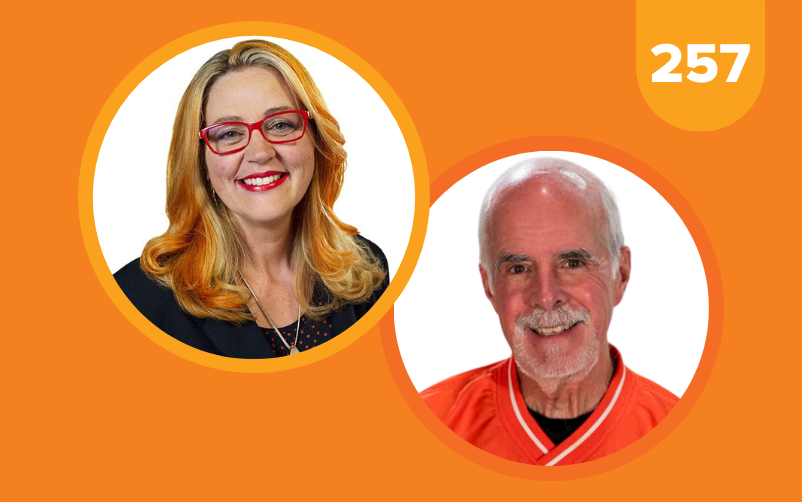
From Radio Waves to Digital Tides: Tom Scott's Journey in Media and Marketing
Subscribe at any of the services listed above. 👌
And if you like what you hear, please consider leaving us a 5 star review!
Tom Scott


About Tom Scott
Tom Scott is a seasoned professional in Idaho broadcasting with over 50 years of experience. He launched his own agency after nearly 14 years as the top-billing electronic advertising executive at KTVB. Tom’s strong industry reputation has contributed to his success in the agency business.
He began his career as a radio DJ and sports TV personality, gaining expertise in all facets of broadcasting. Known for his integrity and reliability, Tom manages client accounts effectively and is actively involved in the community. He has served as president of the Boise Advertising Federation and has received numerous awards from various organizations.
Recently, the Tom Scott Agency merged with Peppershock Media.
Topics discussed in this episode with time stamps
00:00 – 00:20 “It’s hard for people to stop doing stuff that they think is working but isn’t. Well, it’s always worked before, so it’s the way it’s always been. And just because it’s always been that way doesn’t mean it’s going to continue.” — Rhea Allen
00:21 – 00:39 Welcome to Peppershock Media’s Marketing Expedition Podcast
00:40 – 02:27 Tom’s Background
02:28 – 08:11 Marketing Essentials Moment: Merging Agencies, A New Chapter
08:12 – 12:30 Welcome to the show, Tom!
12:31 – 15:19 The Tom Scott Agency and Peppershock Media Merger
15:20 – 18:49 Retain, Maintain, Gain
18:50 – 23:43 Memorable Client Campaigns
23:44 – 26:14 The Evolution of Advertising
26:15 – 27:37 Targeting the Right Audience
28:15 – 33:02 NIL and Local Business Partnerships
33:03 – 36:57 The Changing Landscape of College Sports
36:58 – 42:26 The Future of Marketing Strategies
42:27 – 46:51 The Digital Experience
46:52 – 51:00 Pop Culture and Marketing
51:01 – 51:15 Tom’s Words of Wisdom
51:16 – 53:41 Thank you so much, Tom! Share this podcast, give us a review, and enjoy your marketing journey!
53:42 – 54:28 Join the Marketing Expedition Community today!
Like what you hear, but need more information?
Read the Full Transcript:
257 – From Radio Waves to Digital Tides, Tom Scott’s Journey in Media and Marketing
Rhea Allen: It’s hard for people to stop doing stuff that they think is working but isn’t. It’s hard to, well, it’s always worked before, so it’s the way it’s always been. And just because it’s always been that way doesn’t mean it’s going to continue. We’ve always done that.
Tom Scott: We’ve always bought the yellow pages.
Rhea Allen: Yeah, somehow I don’t think that’s going to continue to work.
Voice over: Welcome to the Marketing Expedition podcast, an auditory journey through the latest in marketing, branding, and advertising. Now, here’s your Marketing Expedition guide, Rhea Allen.
Rhea Allen: In this episode of the Marketing Expedition Podcast, it’s my pleasure to get to speak with Tom Scott. He is a 50-year veteran of Idaho broadcasting, and Tom formed his own company at the start of the new century. And after almost 14 years at KTVB as the top billing electronic advertising executive in the state, Tom’s solid reputation in the industry set the table well for his success in the agency business. He’s experienced in all facets of broadcasting dating back to his first days as a radio DJ and sports TV personality, and continuing with his ability to manage accounts with the integrity and reliability clients have come to expect. And he’s extensively involved in the community. And Tom is the past president of the Boise Advertising Federation, and has been the recipient of awards from the Idaho Press Tribune, Idaho Press Club, Idaho State Broadcasters Association, Idaho Advertising Federation, and American Advertising Federation. He’s also a graduate of Boise State University with a BA in communication. And most recently, Tom Scott Agency has merged with Pepper Shock Media. And so we are so thrilled to have Tom and all of his experience join us at Pepper Shock. And with being able to serve his clients under the Pepper Shock umbrella now, that just happened in December of 2025. And so now it’s my pleasure to get to speak with Tom and share his story and some things that he’s doing now and taking care of goats of all things. So stay tuned for that. And We’ll have more on Tom and our story of how we came together to be, um, merged together with under the Peppershock umbrella. So, um, with that, it is now time for our marketing essentials moment, the basics that you need to help you continue to build your brand and your bottom line. And then we’ll get into the interview.
Rhea Allen: Today’s topic I think is appropriate since we’re talking about merging and buying another business and how our agency has grown because of that. And a lot of considerations and factors went into making sure that it was the right fit and our culture as our own marketing channel. the experience and what we want to be able to continue to do to retain, maintain, and then gain as a result of us merging and buying another agency. So I thought it would be fitting because I get to interview Tom Scott and he is the agency that we just were able to merge and acquire. So just some things that we went through in the process of just making sure that we did our due diligence and making sure that it would be a good fit and the employee that we were able to also gain as a result, you know, making sure that we have trust and that we’ve got alignment with all the clarity and And understanding with our clients too, new to us clients now, how we can make sure that our response times are going to be there, that they’re going to be able to follow, you know, what they’ve been used to, but also introducing new ideas and new ways of doing things too. And having their experience be consistent and not feel like they’re, you know, not going to be taken care of or anything like that. If anything, we’ve done everything to help make sure that the transitions are going well, that we’re meeting every one of the new faces to us and that they get to meet us and go through that process so that it feels less worrisome or anything like that. Because we want to make sure that the trust is there. that everything is consistent and there’s not so much change that it makes them unnerving. So, but yeah, I mean, it’s been good to really get to know the new to us clients. Some of them have been Tom’s clients for years and years, which is really cool that he trusted us to help take these on so that he can eventually enjoy his retirement years as they come. But yeah, I mean, essentially just unifying the culture between both agencies. And believe it or not, there’s some clients that he went after in his agency that we went after in ours and he won some, we won some, or maybe we took some from him, maybe he took some from us. And so it’s been kind of a fun ride to go through that and then have him show up to one of our marketing events and say that he comes in peace. We’ll share a little more about that in the story. We also want to make sure that our processes, you know, that the tools that we’re using are understandable that can, you know, be used by everybody and understood and processes followed by all. what the communication cadence may be, and timelines, and how they did things, how we do things, and how we’re moving forward to do things. We’ve learned some things from him, introduced some new ideas and new things too. And then also just keeping sure that all of the people that Tom’s worked with, we can still continue to work with. and, you know, keep those relationships solid, just making sure that we’re not dropping the ball or doing anything that is going to damage those relationships. So it’s been fun. You know, it’s been busy. It’s been helpful. It’s also a great growth strategy for us to now essentially over in one night have new employee and new clients, all all within, you know, setting of the of the agreement. Right. So anyway, um, if you’re ever in that position. We did some research and, you know, just wanted to figure out what kind of questions to ask and what kind of, you know, things that we would need to know and how to go about, you know, valuing and understanding the valuation and. having a good lawyer to write up a contractor and every night and, um, you know, all the things to consider. Cause we’ve never, we’ve never bought a business before, so we didn’t know what we were doing until we, we did it. So, um, yeah, I think if you’re in a business situation where you can, you know, be able to buy another business is, um, the benefits of that is now you’ve suddenly grown your client base, your, your, all of the things that come with that. So, Anyway, just lots of things to consider as we went through this process and so far so good. I think things are coming together and, you know, I guess I don’t know what I don’t know, but I feel like it’s going well. And just making sure that we are, you know, having our response times helpful and that we’ve got, you know, our project manager in align with what needs, what her needs are and what the client needs are. All the things that we’re doing to integrate and update and upgrade and, you know, new processes, new tools. There’s new tools every day. It seems like new ways to do things every day. And so just integrating all of those and finding what’s gonna work best, right? And not to get too overwhelmed with all of the things that we’re wanting to deliver and do. So anyway, with that, I am excited for you to hear from Tom and I. He got to come into the podcast, Peppershock podcast, Poderific studio, I should say. And we got to talk face to face, eyeball to eyeball. So enjoy his story.
Rhea Allen: Welcome to the Marketing Expedition podcast. I’m your host, Rhea Allen. I’m the president and CEO of Peppershock Media and the founder of the Marketing Expedition community. And today’s guest, it’s my pleasure to have Tom Scott in the Poderific Peppershock studio. Welcome, Tom.
Tom Scott: Thanks, Rhea. I’ve been looking forward to this.
Rhea Allen: Excellent. Well, first of all, let’s just give a wonderful history of who you are and what you’re doing now. And we will dive into a whole bunch of fun, exciting things that we’re doing and working on together. But give just a kind of a brief history so that people who don’t know who you are can learn a little bit more about you and what makes you so awesome, Tom.
Tom Scott: Thank you. Well, I was born in, no. I got my first radio job right out of high school, age of 17, at KFXD, right here in Nampa, well, out on Amity Road.
Rhea Allen: Yeah, Amity Road.
Tom Scott: Amity Road, south of Meridian. And was there for nine years. It was the funnest time. It was in the 70s when radio was something else. And it was so much fun. Then I segued over to TV sports director at Channel 6 and then Channel 2. And then I segued into advertising at Channel 7 in 1986. And since I was there, they said, well, since you’re here and with your sports background, do you want to do the color on the football games? Sure. Do you want to co-host the coaches shows on Sunday night? Yeah, sure. So I did double duty at Channel 7 for 14 years.
Rhea Allen: NBC affiliate, the Peacock.
Tom Scott: The Peacock, the local NBC affiliate in Boise. And then at the end of the 90s, 1999, I was strategized like it’s 1999. And I thought, you know, I can, I could do this for all forms of advertising, not just TV. And I was helping small businesses and medium sized businesses at Channel 7. So I could, I could do it for all forms of advertising. So I formed my agency on January 1st, 2000, Y2K, the lights stayed on, nothing happened. It’s just a bunch of firework shows all across the world, yeah.
Rhea Allen: Exactly. I know, I was directing news that night, Channel 12. Yeah. So we both have TV background, but yeah. So while you were at seven, I was at 12 and directing news. And the first one that hit was Sydney, Australia and nothing was wrong.
Tom Scott: That’s exactly what I was going to bring up. I was at a party and you know, the TVs were on. And so here’s Sydney and the opera house and everything going.
Rhea Allen: look nothing’s happening you know going around the world and uh it was great and then our uh station was uh uh downtown uh boise idaho near the home uh the depot the train depot and they had like a flat whatever those balloons uh the hot air balloons were lighting up and fireworks and you know parties and yeah i just remember like oh that was such a let down. I thought everything was going to turn up.
Tom Scott: We had all our batteries and all of our, you know, jugs of water. We were not ready, but we thought we were.
Rhea Allen: So you kicked off Tom Scott Agency or Tom Scott Communication Shop at the time, right?
Tom Scott: Yeah, I called it Tom Scott Communication Shop and my colleagues said, let’s call it Tom Scott Agency. That’s better than, I always thought Tom Scott Communication Shop was kind of cute.
Rhea Allen: Right? And so walk us through that. Who was your first client?
Tom Scott: Well, one of them, I started with like eight clients that I had worked with before. And one of them was Pastry Perfection. And so they have been with me and now with Pepper Shock all the way through. Pastry Perfection is a bakery in Boise. Been in business since 1983. And they’ve been a joy to work with. Yeah. And continue.
Rhea Allen: I mean, they’ve got to be your longest client that now we get to work with at Peppershock. Definitely. Yeah, that’s amazing. So I guess we should fill people in. December 1st, 2025, Tom and Tom Scott Agency merged with Peppershock Media and And so, as a result, we have our new senior project manager, Kim, and then, of course, Tom, consulting and doing the non-ownership roles, really, now. Right, right.
Tom Scott: Yeah, I’m enjoying it.
Rhea Allen: The first thing he said to me is, I don’t have to do bookkeeping anymore.
Tom Scott: No more invoicing. Let Drew do it.
Rhea Allen: Oh, I know, I know. And we’re getting a bookkeeper. I have an interview today. Fingers crossed that we can hire. But yeah, so I want to share this story because Pepper Shock’s been putting on these word of mouth mixers once a month. And our good friend Adrian Esposito at Washington Federal Bank allowed us to host at their location. And in comes Walking Tom. And I’m like, what is Tom doing here? competitor, like, why are you at one of my events? Come on, what’s happening?
Tom Scott: Yeah, and Adrienne was in a networking group, and so she was telling everyone at the networking group about the word-of-mouth mixer coming up, and this was back in June, and so it’s on June, whatever it was, and she was talking to me, you know, you should go, it’s really fun, they do a great job, Pepper Shock, and I went, well, you know, I’m kind of a competitor.
Rhea Allen: We’ve kind of exchanged clients a couple of times, right? There’s a couple of different clients that you had that we got and vice versa. But you won that we were after. Yeah, yeah.
Tom Scott: And so I said, you know, I’m a competitor. It wouldn’t be anyone. You know, because I had been kind of plotting a course for a while and a couple of things had presented themselves and I thought, that’s not going to work. The clients won’t like this and Kim Sausserman won’t like this and it would blow up. And then I thought, You know, Peppershock, they would be a good fit for my clients because they do the same things that we do on a grander scale. They have a deeper staff than we do. And so I decided I was going to the Word of Mouth mixer and I could see, I could read Rhea’s face.
Rhea Allen: Yeah, I could tell exactly what was going on. What are you doing here? So I come in peace. That’s exactly what he said.
Tom Scott: I come in peace. Right, right.
Tom Scott: I said, we need to have lunch. And then you kind of figured out where I was going. And so we worked on it for many months and it came to fruition. And it’s been awesome.
Rhea Allen: Yeah, so far so good. Fingers crossed that we can maintain, retain, and then gain, right? That’s the idea.
Tom Scott: Now, is that retain R-M-G?
Rhea Allen: Oh, sure. Maybe we can go with that. Retain, maintain, gain, or gain, maintain, gain.
Tom Scott: That could be part of your, you know, when you speak to groups, you can do the R-M-G.
Rhea Allen: I can do the R-M-G. I already have the three Cs. Coffee, conference, call, cocktails to follow up, right?
Tom Scott: And you have some R’s, don’t you?
Rhea Allen: Reconnect, yeah. Ratings, rankings. reviews, referrals, and then rewards. And those are my five R’s that I say to help accelerate and fuel word of mouth marketing. So yeah, good job. Good memory.
Tom Scott: Yeah. So on December 1st, it became effective and I’ve been helping out the past couple of months. And so I’m a senior consultant now and I’m happily at Peppershock today.
Rhea Allen: That’s right, that’s right. And the beautiful thing about this is it’s so great because you can still go out and help drum up new business. And it doesn’t necessarily have to rely on Drew and I to do. And now, because you know how to gain business, that’s really exciting too. And you’ve already brought us a new client that we get to work with because of your efforts. So thank you for that. Yeah, hopefully more. Yeah. I mean, and plus all of the clients that you had then now are on board too. And then of course, Kim, as our senior project manager, which thank goodness she decided to stay on board because otherwise I don’t know how we could do it all. I know.
Tom Scott: And it just wouldn’t have, it may not have worked if Kim hadn’t been part of it. That was the idea.
Rhea Allen: That’s the first thing she said, do you guys want me? I’m like, absolutely we need to.
Tom Scott: Right. Yeah. Yeah. So that was a key piece of the puzzle.
Rhea Allen: Absolutely. And now you get to spend a little extra time at home with your goats and your family. Tell us a little bit about your day. You just were sharing earlier before we started recording.
Tom Scott: I was working on a retaining wall this morning before I came over to Peppershock. We have a little urban farm in northwest Boise and my wife Beth and I and we have, right now we have five goats. We have three adult goats and two baby goats. The baby goats were born on December 20th and so That’s an odd time for goats to be born. It’s usually in the spring. But this goat that we were given happened to be pregnant and due in December. So we’re going, what if it happens in the middle of the night and it’s 21 degrees and we would have lost him. I mean, and we were just mentally prepared for that. But, as it was, December 20th was one of those mild December days that we’ve had this winter. It’s 45 degrees at noon, and that’s when they were born, and everything was fine. And they are really cute.
Rhea Allen: I saw pictures, they’re adorable. Oh yeah, they jump.
Tom Scott: They jump up on the monitor. But they’ve been sold. So we’ll have them about a month longer until they’re kind of weaned off mama. But there will be more. There will be more. And we also have three chickens. And we have a cat. And then we will probably have a couple of sheep this summer.
Tom Scott: Although with
Tom Scott: With three adult goats we may not need the sheep to mow the pasture.
Rhea Allen: So we’ll see how that goes. Well let’s go on a marketing journey together. Your years of experience in some of the creative and clients that you’ve served and things that you’ve done. I just, we have a wealth of knowledge from you that we’re doing knowledge transfer, but I want to ask you, what are some memorable campaigns, memorable client campaigns that just automatically pop up in your mind?
Tom Scott: Ooh, I wish you had prepped me for that.
Rhea Allen: I’ll have to come up with that. This makes it candid and authentic, Tom.
Tom Scott: Yes, exactly. Well, at Channel 7, we had some cool campaigns. Swim and Run Shop comes to mind. They no longer exist. They were downtown, and then they were on Fairview.
Rhea Allen: And I remember then being on Fairview. I purchased a swimsuit from them like off season because I was going to Mexico and I needed a swimsuit, but I can’t find a swimsuit anywhere except there.
Tom Scott: So, yeah, yeah, it was great. Nina Shelton was the owner and the late Nina Shelton. And she she was really involved in the swim team.
Rhea Allen: Yeah.
Tom Scott: And so that’s how it started. Everyone. She was selling swimsuits out of her trunk to swim teams. And then she decided to open the swim and run shop. And We did a lot of funky things with them. One of them was kind of a rhyme. And it had kind of a Dr. Seuss feel to it, a rhyming spot. And then we got a letter, a cease and desist letter from the Dr. Seuss people. Okay. Yeah, that was fine. I mean, we were, we were proud that we got a, boy, it was paying attention.
Rhea Allen: Yeah. It was that good.
Tom Scott: And then we, we would just make things work for them production wise. And, um, so I, I drew, I hand drew like, 15 swimsuits with colored markers. And then we put them on an easel in the studio and we dissolved between them. And so that one was fun. And then one of our really, I feel, good success stories is Optimist Youth Football, which is now one of Piper Shock’s clients. Because they were probably, I’m thinking 10 years ago, They came to us and when they would do their campaigns for sign-ups, it was always, you know, football, football, football. And I said, well, are we really trying to reach that crowd or are we trying to reach moms who are… The ones that take their kids to football practice every day or week, yeah. And who are… want to know what the safety protocols are, which are tremendous with optimism in football. Heads up football, right? Right, exactly. And then the benefits of teamwork and camaraderie and life’s lessons and all that. And so we completely changed the focus and their numbers really grew. I was a part of that.
Rhea Allen: My oldest son played optimist football and I remember that field and going out there. It’s a beautiful field in the middle of nowhere.
Tom Scott: You mean the one in Boise?
Rhea Allen: Yeah. Yeah.
Tom Scott: Yeah. Northwest Boise. It’s very close to our house.
Rhea Allen: Oh, okay. Yeah. Yeah. No. And you’re right. Like that was definitely a concern as a mom. Right. You want to make sure that your kid’s not going to get hurt or, you know, and they probably could, but at least that they’re thinking about safety first. Yeah.
Rhea Allen: Oh, they have a great relationship with St. Al’s. There’s medical on site at all events for Optimist Youth Football, and the equipment has improved tremendously. They have a program now called Flex Football, which is a cross between flag football and tackle, where it’s got light padding and light helmets, and it teaches kids the fundamentals of tackle football in a very safe and transitional way. But their numbers increased even through the pandemic and so we were really proud of that.
Tom Scott: Yeah, absolutely. Sometimes just making that shift in to who you’re targeting and who you’re going after and the messaging, right? You wouldn’t say the same thing to the moms as you would to, you know, the guys that would want their kids to play football. It’s very different. and the channels that you would put on TV and radio, or in this case, on connected TV and streaming that we’re doing. Very different message for both sets of targets, for sure.
Rhea Allen: Yeah, and you bring that up, bring up stream TV, etc. When I started, January 1st, 2011, Y2K, It was all traditional radio, traditional TV, billboards, newspapers, some direct mail. And it seemed so easy back then, didn’t it? I mean, gosh.
Tom Scott: Yeah, I mean, we started before Facebook even was invented, and you know, before the Google AdWords took off. And yeah, it was traditional media. You know, you had the buys, and you knew what you’re doing, where you’re going, and that’s pretty much the options you had. Right. Maybe movie theater advertising, You know, yeah, there really wasn’t a whole lot of places to go. Right. Like there is now.
Rhea Allen: And then in not so many years, digital, you know, attacked. And so now you have digital everything. We still use some traditional because there are still eyeballs and ears there.
Tom Scott: Yeah.
Tom Scott: But, you know, Facebook, Instagram, Pinterest. Well, you can you go ahead. Rattle them off.
Rhea Allen: Yeah, all of the above, TikTok and Snapchat, all the things, you know, and I was telling my students, I’m also teaching at College of Idaho and Boise State now, and I was telling my students the other day, the average household home With two parents, two kids, two car garage, I have 16 different devices on average in their home and probably even more on the upside and maybe less on the downside. But 16 different devices. I mean, even your refrigerator can have a smart device now. You can have an advertising on your refrigerator if it got really good at it. And so, yeah, digital every space, every place, and find me, follow me. You can be listening to Spotify in your car or at the gym. You can see an ad on the screen at the gym, and now you’re gonna go in your car, you’re gonna hear it on Spotify if you don’t pay for the premium, or any other platform that’s out there, you’re gonna hear it. And then you’re going to be able to ask your car certain questions. And it’s going to give you answers based on the ads or the ways that people are using generative AI now to be in the results of when you ask these devices questions. And then you’re going to go home and you’re going to see it on the big screen. And you may have your cell phone in front of you. You may have your iPad or your laptop in front of you while watching the big screen.
Tom Scott: And that ad will follow you. It will follow you.
Rhea Allen: It will follow you wherever you go. Right. That’s what we can do now.
Tom Scott: There’s some creepiness involved there, but you know.
Rhea Allen: Yeah, we can do it. I mean, we can get down to, Drew was just telling me, like, if we had an email address of somebody that we wanted to make sure had the ad, and if their information is, you know, out there, available, we could Make sure an ad actually gets seen by that person.
Tom Scott: Mm-hmm.
Rhea Allen: It’s crazy.
Tom Scott: It’s down. It’s down to that Yeah, so talk about targeting.
Rhea Allen: Yeah one person what you can target one one person. Yeah one person Yeah, so if somebody’s really wanting that job and make sure your name and resume get in front of that person You can do it. You could do it. I mean kind of expensive for that. But hey, you could work. Oh
Tom Scott: Yeah, if that’s all you want to do, it’s worth it.
Rhea Allen: It’s totally worth it. Right. Yeah, I know it was, it’s, you know, there’s obviously a margin of error because people may put in like false emails or false information. But a lot of people who provide their first party data themselves, where they fill out a form and information, then yeah, those people can be targeted in Ideally, all opt-in way, right? With permission. Yes, right.
Tom Scott: Above board.
Rhea Allen: And allowing the cookies, allowing the people to have the ability to follow you on your IP address. Yeah, all of that is open game for marketers.
Tom Scott: It’s amazing.
Rhea Allen: For sure.
Voice over: Want to start a podcast but don’t know where to begin? At Poderific, we don’t just produce podcasts. We help you create auditory experiences that will captivate your audience. Our state-of-the-art podcast recording studio, powered by Peppershock Media, is designed for creators like you. Record with high-quality equipment supported by our expert team and distribute your podcast across major platforms like Apple and Spotify. Whether you’re launching your first episode or you’re a seasoned podcaster, we got you covered. Visit Potterific.com today to learn how we can help you produce, record, and share your story with the world. Your podcast deserves to be Poderific.
Rhea Allen: Okay, let’s think about another campaign, maybe something recently that you had that’s kind of come top of mind to you that was something that you did for a client that is maybe something that we can go on a journey with and marketing perspective.
Tom Scott: Well, NIL, name, image, and likeness became a thing on July 1st, 2021, just four and a half years ago. All of this has happened in just four and a half years. And the Supreme Court, told the NCAA you can’t restrict players or student athletes from making money off their name, image, and likeness. So everything became legal on July 1st, 2021. And very quickly, the SEC schools found all the loopholes in it. And there were these huge numbers being thrown around. But originally, at Boise State, it worked the way it was supposed to work, where you have a player who represents a local business and does some commercials and does some personal appearances and gets compensated for it. And so in the first year we, for pastry perfection, we developed a relationship with Tyson Degenhardt, the Boise State basketball star. He was just finishing his freshman year and- Perfect timing.
Rhea Allen: Yeah, well, exactly. Yeah.
Tom Scott: And I’d like to take credit for the Degenhardt Dozen, but it was actually the idea of Mike Walsh, who was the director of NIL at Boise State that first year. And he emailed Pastry Perfection and suggested it.
Rhea Allen: Nice.
Tom Scott: You know, Degenhardt Dozen, 12 of Tyson’s favorite doughnuts, and what do you think? The owners, Mike and Brent Curry, showed me the email. What do you think of this? What is this? I said, well, Tyson Degenhardt is going to be the face of the basketball program for the next three years. Let’s find out more about it. And the dollars worked. And so Tyson came down to the bakery and he was just an absolutely great guy.
Rhea Allen: And he signed the card?
SPEAKER_07: Well, he came down to the bakery to meet Mike and Brent first, you know, and yeah, what can we do? And here’s what here’s what we’re thinking. And so he he did commercials, radio and TV commercials. And it was always whenever you need me, I’ll check my schedule and I’ll be there. And he always was. And he did two autograph signings per year where he’d come down. They had a cardboard cutout of him. The bakery was all decorated. They had cookies with his face on them and he’d sign autographs and take pictures. And the twist that we added was if you bought a Dagenhart dozen, 12 of Tyson’s favorite donuts, it was four chocolate sprinkles, four maple bars, and four glazed.
Rhea Allen: You’re making me hungry. Oh, so good. They were popular.
Tom Scott: Then you got a free autographed Tyson Degenhardt basketball card.
Rhea Allen: Nice.
Tom Scott: And the basketball card part, I mean, I grew up with trading cards. So I could design one in my sleep. And so it’s a really authentic looking trading card with his stats on the back and all of that. And then I’d give a stack of them to Tyson and he’d sign them. And they had them in the drawer at the counter and would hand them out. And then the great thing about Tyson and his family is his grandparents would come down from Spokane to watch games. And they would go to Pays for Perfection and buy a bunch of Degenhard Dozens. And there was a game last year, about a year ago, his senior year. And it was a CBS game, a national CBS game. I think it was San Diego State in Extra Mile Arena. And before the game, he goes down to Pastry Perfection, gets a Dagenhart dozen, and takes them to the play-by-play team. Clark Kellogg. I can’t remember who was doing color that day, but Clark Kellogg, one of their big national CBS announcers.
Rhea Allen: Great opportunity.
Tom Scott: And it ended up on the telecast. And so it was really, really fun.
Rhea Allen: That was a good partnership, especially when the athlete engages. I feel like that’s the whole part of what needs to happen with an NIL deal, is where they are fully engaged and support the brand that they’re supporting, right? Yeah, I know my son got a small little NIL deal with a clothing line, and so that was fun for the moment that it lasted. Right.
Tom Scott: And it’s harder to do now for small business, small and medium-sized businesses, because last summer, revenue sharing became legal, where schools could share revenue with players. So all the players are paid now. That’s crazy. And so these small relationships aren’t that big a deal anymore. You know, they’re, they’re not, they’re just.
Rhea Allen: Yeah. I mean, from the athlete’s perspective, I can see a benefiting because being a college athlete is a full-time job in full-time school, but full-time, I mean, I just remember my son being in the gym like twice a day in the early in the morning. And, you know, he’s doing his weightlifting. He’s now watching film. He’s at football practice. He’s back in the gym, you know, doing all the things meanwhile, eating like eight meals a day. Cause he’s a big boy, but. And I just was like, when do you have time to do anything else? Yeah. Right. Yeah. It’s so crazy how much they spend.
Tom Scott: Yeah. And people can decry the the ruination of college sports. And, you know, there’s some truth to that. But some recruitment.
Rhea Allen: Right. I mean, yeah. How much are you going to pay me? Oh, yeah. Other colleges going to pay me more oil. Yeah, and in the portal, the transfer portal too. I mean, there’s now, you know, people wanting to get into the transfer portal. It kind of just damages the team camaraderie, right? Oh, maybe somebody else is going to go pay me more. So I’m going to leave. And that’s like damaging to the team. You’re right.
Tom Scott: Boise State’s been very fortunate in the transfer portal. Boise State football has not lost very many frontline players to the transfer portal. And one in particular stayed a couple of years ago, you may remember his name, Ashton Gentee. Ashton Gentee, who could have, he could have commanded so much money at an NCC school, but he stayed at Boise State for his final year. And that was a big deal.
Rhea Allen: That was a big deal.
Rhea Allen: But maybe it would even be different for him now. Even two years later, maybe it would be different for him.
Tom Scott: It could have been. He was the second in getting the Heisman nomination. So who knows if it would have changed anything. Maybe not. Maybe so. I don’t know. But we’re happy that he stayed.
Rhea Allen: It’s just a little over a year ago, but when you look back on that season, that was 12-2, college football playoff quarterfinals. I mean, when will that happen again? Will it happen again? That was pretty special.
Tom Scott: Well, and we caught Ashton at the right time because now there’s a sandwich named after him at one of our clients’ restaurants.
Rhea Allen: Yeah, yeah, at the James on Broadway. They have the Ashton Gentee sandwich. And so he He made this arrangement with the James and they paid him in gift cards. And it was a great deal for the James. They didn’t pay thousands of dollars to Ashton Gentee, they paid him gift cards. And Ashton would take the gift cards and put them in the lockers of his offensive linemen.
Tom Scott: Yes, it’s a thank you for making, yes, yes.
Rhea Allen: He knew who buttered his bread.
Tom Scott: That’s right. Well, and it even turned into a news story and got all kinds of traction that way. I mean, that’s just the residual side effect of doing deals like that to where you can get a lot more publicity as a result. So, yeah. Yeah.
Rhea Allen: So, I mean, there are still good NIL opportunities, but you have to be kind of a bigger business than you used to be now, unfortunately.
Tom Scott: Small fish, you have to be a little bit bigger of a fish to afford it now because the players are accustomed to more now. Right. Yep. Yeah, that makes sense. But yeah, it’s always helpful, though, when you do have a player that cares and that will show up and be participatory. So that’s awesome.
Tom Scott: Tyson Dagenhart was that guy.
Rhea Allen: Yeah, that’s great. Well, I appreciate that story because I think that just finding new ways, clever ways, creative ways to get your brand out there. And now, you know, we talked about how in traditional, you know, there’s a handful of methods and now there’s so many ways to get your message out. in so many ways that you have to cut through the clutter to make sure that you are standing out and being able to get the message across to the right people at the right time, and maybe even multiple times, 16 times on all the different devices.
Tom Scott: Didn’t it used to be three?
Rhea Allen: Yeah, like yeah, three to five. Now I think 16. Yeah, it’s like so many more times to get in front of people to hear your brand over and over again to where they even acknowledge that they’ve even heard of it before. Yeah, it’s a lot. I know the other thing I was telling my students too is on average I asked them, how many ads a day do you think or brands a day are you exposed to? And people guessed 200, no, keep going. 500, no, keep going. We looked it up, it’s over 4,000 a day that we are all exposed to. Whether you see that, whether it registers to you or not, that’s what you see. That’s how many you see over 4,000 ads or brands a day. And, uh, they couldn’t believe it. And I was like, well, think about it. Right. And even if you’re in the bathroom, the P posters on the wall, right. to advertise a brand while you’re going to the bathroom, right? Or even if you open up different, what am I trying to say, have partnerships with different brands, like on Oreo cookies they were promoting a movie, and so that’s another brand, and two brands at the same time, so you’re just getting all these different collaborations and partnerships of brand exposure in so many different ways. And really, that’s the secret is trying to find the right way to get in front of people and the right reach, the right frequency, and just continuously working at it to get in there. And what happened last year may not happen, or what worked last year may not work this year, right? I mean, it’s just an ongoing science.
Tom Scott: And budgets are so wildly different.
Rhea Allen _03: Yes.
Tom Scott: And you guys are really good at taking a budget and figuring out what to do with it to make it work. If it’s small, all right, then we’re going to funnel it here and funnel it here. And you can still get results.
Rhea Allen: Ideally, that’s always the goal, right? To get results. And if we’re not, then we look at what to stop, start, keep, or tweak doing and why. When we work with clients, they always have a whole bunch of things to start doing and never anything to stop doing. So I’m like, OK, if you want to do a number of these things, what are you going to stop doing? Because otherwise, unless you give me an unlimited budget, we’re not going to be able to start all of these things. And sometimes it’s hard for people to stop doing stuff that they think is working but isn’t. It’s hard to, well, it’s always worked before, so it’s the way it’s always been. And just because it’s always been that way doesn’t mean it’s going to continue. We’ve always done that.
Tom Scott: We’ve always bought the yellow pages.
Rhea Allen: Yeah, somehow I don’t think that’s going to continue to work anymore. They still exist though, right?
Rhea Allen: Oh my gosh, my grandma. She’s 86 now. The last time I had seen a phone book in years. Well, the thing is, it’s only teeny tiny where it used to be super thick. And I’ll be honest, I think the last time I used a phone book, it was up on my upper shelf. I wanted to prop up my plant so that you could see it better because the shelf was kind of indented. So the phone book made a really good plant teller.
Tom Scott: I haven’t seen one. They’re not delivered anymore. But I think they still exist.
Rhea Allen: Well, you know, I used to have the rep that would come around and try to sell us ads. And every year it just got smaller and smaller and smaller with our clients and to the point of like, Hey, you know what? I haven’t seen the wraparound anymore. Well, we’re not really doing any more yellow page ads. And that, I mean, kind of shifted. Because now you can just look at the number online and get what you need.
Tom Scott: And the yellow pages used to be the easy answer to, where did you find out about us?
Rhea Allen: All the yellow pages.
Tom Scott: And that never was really the case, because they would say Yellow Pages, but they looked in the Yellow Pages, and here’s the name of the business. Oh, I’ve heard of them. Oh, I know who they are. I’ll call them. And there’s a reason that they’ve heard of them, and there’s a reason that they’re familiar with that brand. They’ve seen them elsewhere, but they just said the Yellow Pages. But in the old days, they’ve seen their TV spots, or they’ve heard their radio spots, or they’ve seen their newspaper ads. And now they’ve seen their Instagram ads. And oh, I know who they are.
Rhea Allen: Yeah, and QR codes. I think COVID really lent a good hand in the use of QR codes now with menus and things like that. And so I feel like that’s becoming more commonplace for people to have QR codes to be able to track things, which is nice. Because then you know if, If it is an ad in a traditional space, I mean, in Super Bowl, there was all kinds of commercials with QR codes in them, I noticed, but they were, they’re always gone too fast. I’m like, oh, I want my phone out. So yeah, that’s, that’s the strategy. Keep the QR code up for pretty much the entire time that you have the 30 seconds.
Tom Scott: I’m not, I’m not a big fan of, uh, Ticketmasters tickets because it’s so easy to get lost.
Rhea Allen: I’m coming across like an old guy now. Well, and you’re right, because usually at a ticketed event like that, a lot of Wi-Fi is being used. And so it took my phone forever to pull up the ticket to be able to do it. And now I think you can just store it in your wallet or whatever. We missed the first part of the concert that we, Laney Wilson, we missed that first part of the concert and we were so bummed because we just had to sit there and wait for our phones to freaking populate the ticket master and it was not fun.
Tom Scott: Then you have to get an error message you have to start over.
Rhea Allen: Yeah, exactly.
Tom Scott: What’s my password?
Rhea Allen: What’s my password? Yeah, that’s not fun. I know. I kind of do miss the paper tickets. Well, and the thing is, is every concert I ever went to, I’d always keep the ticket stub. Right. Well, now how am I supposed to do that? And it’s all digital. I know.
Tom Scott: And I kept the important ones. I have the important ticket stubs.
Rhea Allen: Well, there you go. Yeah. And now we can’t. I guess we can screenshot it. I don’t know. It’s not the same. No. You’re just going to do that, right?
Tom Scott: That doesn’t go in a scrapbook.
Rhea Allen: That’s right. Digital scrapbook, yeah. Yeah, sure. I guess there’s memories to be made. But yeah, I know those are fun. But you go back and look at the memories that you kind of, when you look at the ticket stubs, you can go back and like, oh, yeah, I remember that. Do you remember that, when we did that? And those types of things. And now we don’t get that anymore.
Tom Scott: Now I’m going to age myself here.
Rhea Allen: OK.
Tom Scott: I had a ticket stub from a Beatles concert.
Rhea Allen: Ooh, that could be worth money.
Tom Scott: I know. And I lost it. I don’t know how I lost it, because I thought I knew exactly where it was. And it’s been 20 years since I saw it. But the price, it was at the Cow Palace in San Francisco. And the price was $450.
Rhea Allen: $450. Oh my goodness. To see the Beatles. Could you imagine what it would be right now if they were here and we could go to a Beatles concert?
Tom Scott: Yeah, you saw the Super Bowl tickets were costing $4,000 on average. So imagine what a Beatles concert transposed into 2026 would be.
Rhea Allen: Yeah, I think the easiest or cheapest way to see the Super Bowl is to be a tree in the football field.
Tom Scott: Yeah, yeah, the trees.
Rhea Allen: Those are volunteers, yeah.
Tom Scott: Were they volunteers, Bad Bunny’s trees?
Rhea Allen: I think so. Were they? I mean, so Drew and I worked with a guy that is in charge of managing the stage because we had him when we did Great Northwest Outdoor Expo. He came and helped kind of place everything when we did this giant expo at the Fort Idaho Center. And we had like rock jeeps that would climb rocks. We created a duck pond, like actually put water in it, made a pond. And so there’s that. And then there was duck-dog competition. And there was archery. There was all these things. Anyway, the whole property was filled with activities. And anyway, so Doug told us that people will volunteer So all the dancers and all the people out there, they’re actually volunteers to help move in and out of the stage parts, in and out, quickly. Because they have 13 minutes to do it all, right? And so all of those stagehands want to volunteer, because A, they get into the Super Bowl, but they don’t actually get to watch the Super Bowl, because they’re preparing. Yeah, they’re down the tunnels. But at least they get to be in the experience. We always thought, oh, maybe it would be cool to go volunteer and do that, but then we wouldn’t get to watch it. So I don’t know if I’d like that or not, but.
Tom Scott: I’m wondering what good those trees would have done as stagehands.
Rhea Allen: Right.
SPEAKER_07: Well, they couldn’t lift anything.
Tom Scott: They just had to be, yeah.
SPEAKER_07: Yeah.
Tom Scott: But I thought it was pretty clever so that they could waddle out and waddle in and you didn’t have to plant the trees, you know. So some people didn’t realize that they were people behind them.
Tom Scott: Yeah.
Rhea Allen: That was good. It was fun. Have you looked up how much it was to do a 30-second commercial in the Super Bowl?
Tom Scott: Eight million.
Rhea Allen: It was 8.2 million. 8.2 million. What was your favorite Super Bowl commercial? What did you like the most?
Tom Scott: I didn’t see that many this year. I guess the Duncan spot was okay.
Rhea Allen: Did you see the Budweiser with the eagle and the horse? Yeah, that was my favorite. I loved that.
Tom Scott: But they were kind of disappointing overall. A lot of AI generated stuff. I wasn’t excited about that. And the AI companies, never heard of any of them. And so they’re spending $8.2 million. And how are they going to follow up on that? I don’t know. I guess Apple did OK in 1984. But gosh.
Tom Scott: well and it was the apple music halftime show and um so that was interesting for the brand because it used to be pepsi, pepsi halftime and they kind of pulled out but pepsi did have uh the the the bears the polar bears so so coca-cola’s follow-up to that was Oh, it was just a dream. They were just having a dream. And so it was a bad dream or something like that. It was funny. And I loved how they did the Coldplay kiss cam with the polar bears and they got caught drinking Pepsi.
Tom Scott: Yeah, okay.
Rhea Allen: That was cute.
Tom Scott: A lot of dot connecting on that spot.
Rhea Allen: Yes, for sure, for sure. Well, and just pop culture, right? Yeah. And a lot of, it was interesting because a lot of the commercials had music from my era of growing up in the 90s, like the Backstreet Boys and NSYNC and like all these kind of icons. And I was like, wow, they really are targeting the middle-aged, you know, female to get interested in this. It’s just like, wow.
Tom Scott: Yeah, if you think about the Target and Bad Bunny being the halftime show, they’re trying to get down into the lower demos and successfully. And they’re really working hard, as you have said, You know, you’re working with the National Student Advertising Competition at Boise State, and the project is the NFL.
Rhea Allen: Tell us more. Yes. Yeah, well, that is really interesting, because one of the targets they want for the case study, so my students have to basically create a campaign and do a plans book, and then a presentation as a pitch. And the judges in our district will decide who goes on to the semifinals and finals for the American Advertising Federation. And yes, one of the demos that they are calling for in the case study, without giving away too much because, you know, it’s a competition, but is Latina female under anywhere between 13 and 18, or even, I can’t quite remember exactly the demo there. They want younger casual viewers to get more engaged and it’s all about health and wellness and it’s about all these things. So definitely the heartthrob of you know Bad Bunny during the halftime I mean that’s hitting their target for sure that they’re wanting to attract to have more engagement because a lot of the Latina community is definitely into what they call football, right, soccer. And so they want to kind of transition and have people even more interested in NFL. And yeah, I think that there’s a lot to be said about being able to capture their attention at a young age. And they did, I think they did a good job of that. They did.
Tom Scott: Hence the regular season games in Mexico City.
Rhea Allen: Yeah, yeah.
Tom Scott: And all over the world. I mean, the NFL is putting its thumbprint on everything.
Rhea Allen: Everything, yeah. They’re wanting to have a global audience rather than just the United States audience, really. So yeah, it’s out there for sure.
Tom Scott: Yeah, so far so good. So far so good. If you want to put it that way.
Rhea Allen: Yeah, yeah, exactly. Well, Tom, I would love for you to maybe just give some final thoughts and words of wisdom for our listeners who are marketers, they’re students, they’re entrepreneurs. If you had anything to say to them as they go through their marketing journeys, what would you say?
Tom Scott: I would say be open to new ideas at all times and then in communicating with clients and people that you’re going to serve, be a good person and call them by name and get to know them and listen and good things will happen.
Rhea Allen: That is one thing about you and your business that I have learned is you did everything through a handshake. And now kind of the sign of the times, everything has to be somewhat in writing, but you did. And people always had wonderful things to say, yeah, Tom’s a great guy, and he’s good to do business with. So I appreciate that you’ve trusted us to take on the clients that you’ve had. and hope that we can carry that handshake forward always with them.
Tom Scott: It’s a great fit. It’s a great fit. So I’m happy to be here.
Rhea Allen: Yeah, me too. Well, thank you, Tom, for your time today and getting away from the goats to come share with us.
Tom Scott: I got to go back now. And what do I got to do?
Rhea Allen: Retaining well or whatever it is, right? Your honey do list. I have a list. Yes, I do. But you’ll still be out working with us for the next couple of years and doing some community outreach and networking. And you came to Word of Mouth Mixer, thank you. I didn’t really get a chance to talk to you because there are so many people there. It was amazing.
Tom Scott: It was great.
Rhea Allen: It was a good turnout, yeah.
Tom Scott: And I’ll probably be back in this studio sometime in the near future doing the Scott Slant. Somehow. We don’t know exactly what that’s going to look like, but it’s a great idea.
Rhea Allen: We’re going to produce the Scott Slant podcast. Yes. Yes.
SPEAKER_07: Right here in this room.
Rhea Allen: That’s right. Right here in the Poderific Peppershock Studio, or whatever we’re calling it. I love it. Yeah. Yes. Well, thank you so much, Tom, for all of your wisdom. And I’m learning a lot from you, and I love that. Even though we’ve been in business for 20 years, it doesn’t mean that we can’t learn new things, even from those who’ve been there and walked through all of the journeys that you have. So I appreciate it.
Tom Scott: Oh, I feel the same way.
Rhea Allen: Yeah, excellent. Well, and with that, the best thing that you can do to help both Tom and I and share this out with those that you know that need to hear what Tom and I had to say today, and give us a review. Reviews are like gold, right, Tom?
Tom Scott: Right.
Rhea Allen: That’s right. Five-star, five-star. Five-star review. And with that, everyone, thank you for joining us, and enjoy your marketing journey.
Voice over: Thanks for listening to the Marketing Expedition podcast. Want to continue the journey? Don’t miss out on new episodes. Subscribe on iTunes, Spotify, Amazon Music, or wherever you get your podcasts.
Wouldn’t it be great if there was one place you can go to get all the latest information and tips about marketing and advertising? The Marketing Expedition community is that place. People like you gather in our online community to build relationships with others and find the latest marketing trends, tactics, tools, and technology. We help you build your brand and your bottom line. Start your adventure today.
Visit themarketingexpedition.com to find out more.
Links to resources mentioned in this episode
Check out Rhea’s Marketing Expedition Webinars
Thanks for listening to this episode of the Marketing Expeditions Podcast. If you like what you heard today, please subscribe and leave us a review on iTunes, Spotify, or Amazon Music.
The Marketing Expedition Podcast is powered by Peppershock Media, an award-winning full-service advertising, marketing, and video production company.